
##
[Result label]
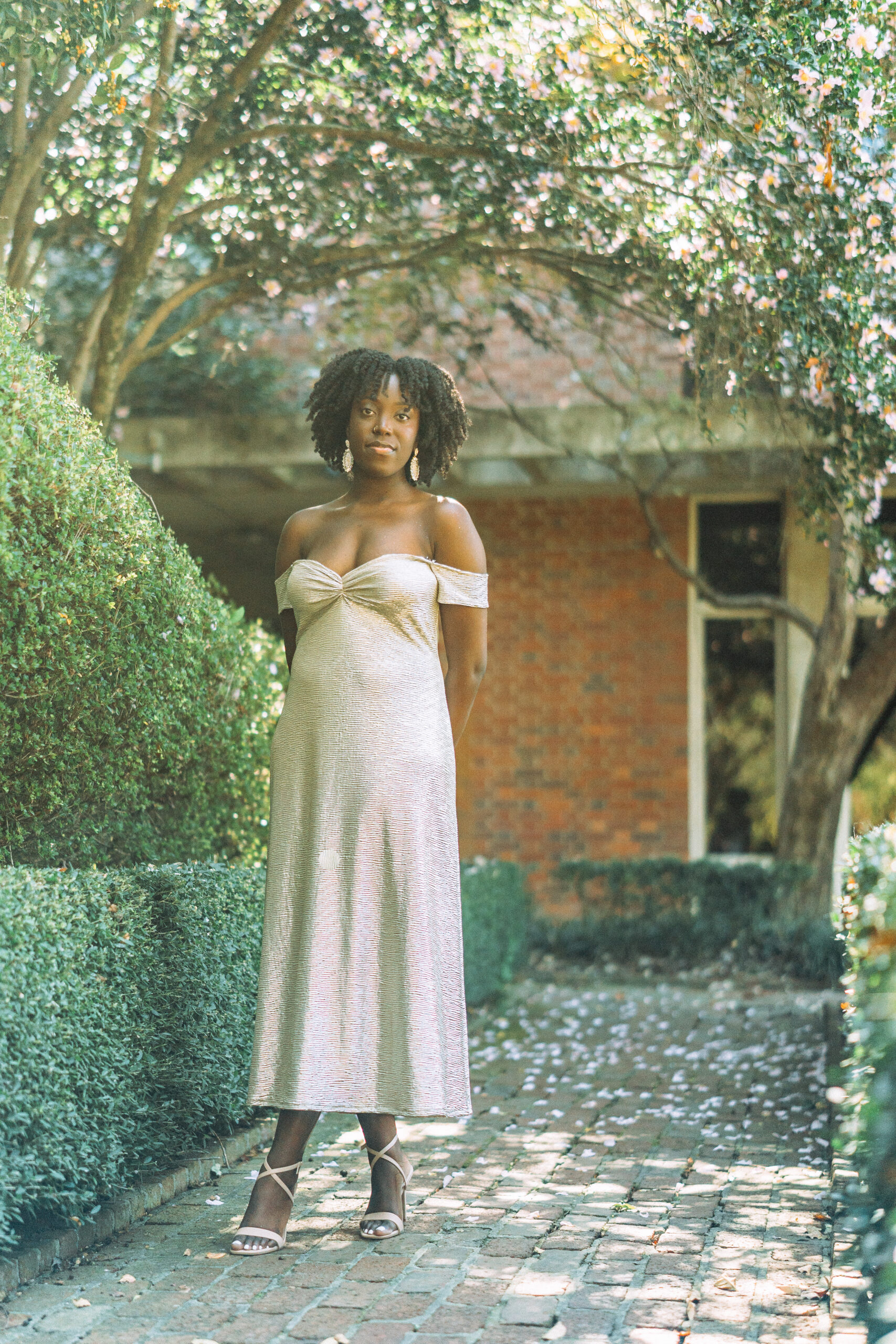
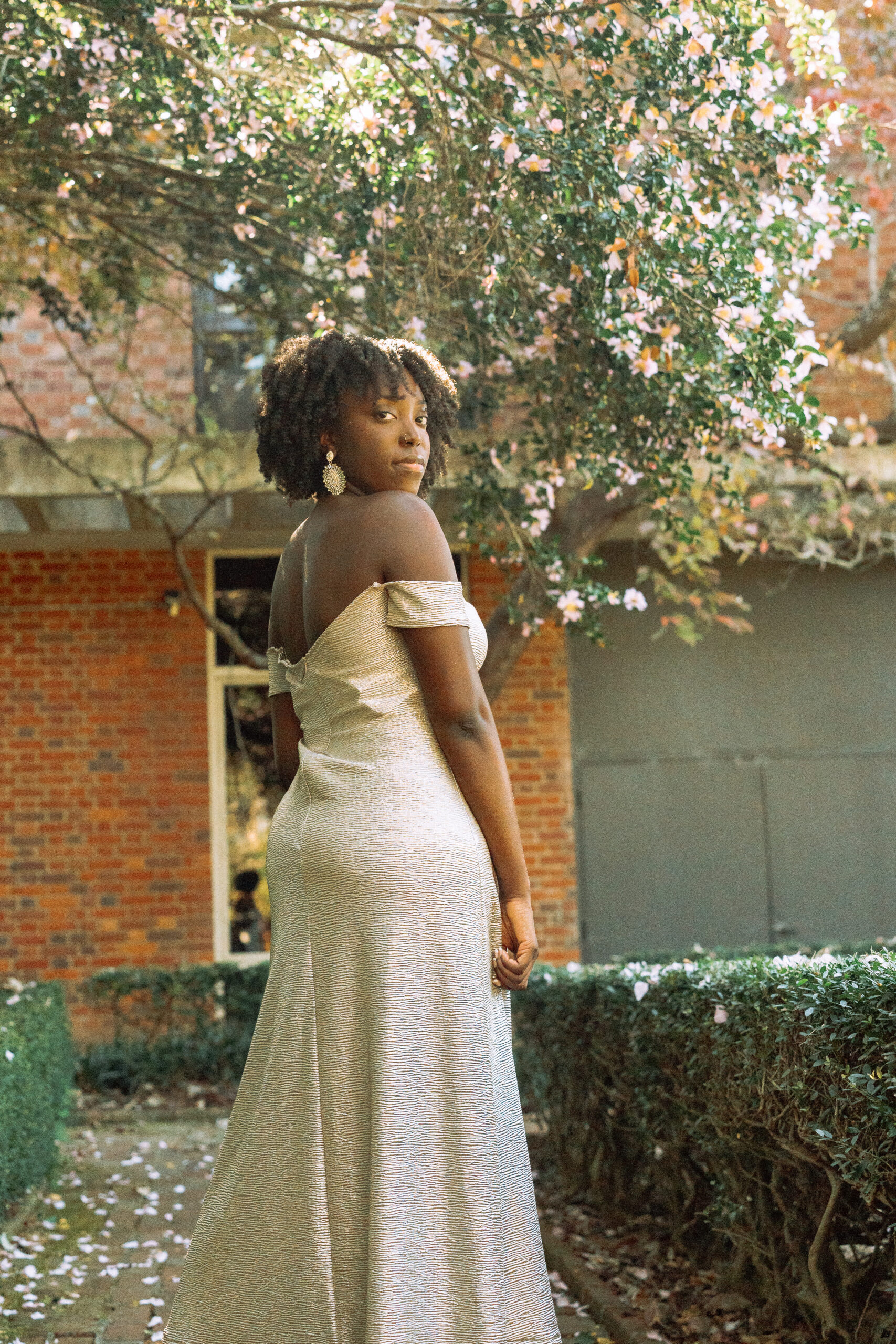
Toni Carter is a technical designer who built a ready-wear brand around a real insight: clothes are designed for a body type, not a body size. She could prove it on a pattern table. She could not explain it to a customer, and customers who can’t tell whether something will fit them don’t buy it.
Client
Toni & Tucker Co.
Services
Brand Identity, Brand Strategy, featured, Web Design
Year
2026
Live site
Visit site ↗
She hired us for marketing and social strategy. We couldn’t do that job yet.
Toni knew her craft so thoroughly she couldn’t get out of the language of it, so customers heard fashion verbiage instead of an answer to “will this fit me.” Products had names nobody could decode. Most critically, customers didn’t know their own body shape, or harmony, which is the one thing that has to be true before a purchase happens. They liked the clothes and left anyway.
The identity was in the same shape. No defined colors, no typography, no voice or mission written anywhere. The logo appeared in a different font depending on where you found it, sometimes beside silhouettes that read like clip art. That’s what a founder doing all of it alone looks like.
We surveyed her existing customers and an audience we identified as likely buyers, and asked them to explain Toni & Tucker in their own words, then to get from the homepage to the cart. What came back told us the problem wasn’t taste. It was orientation.
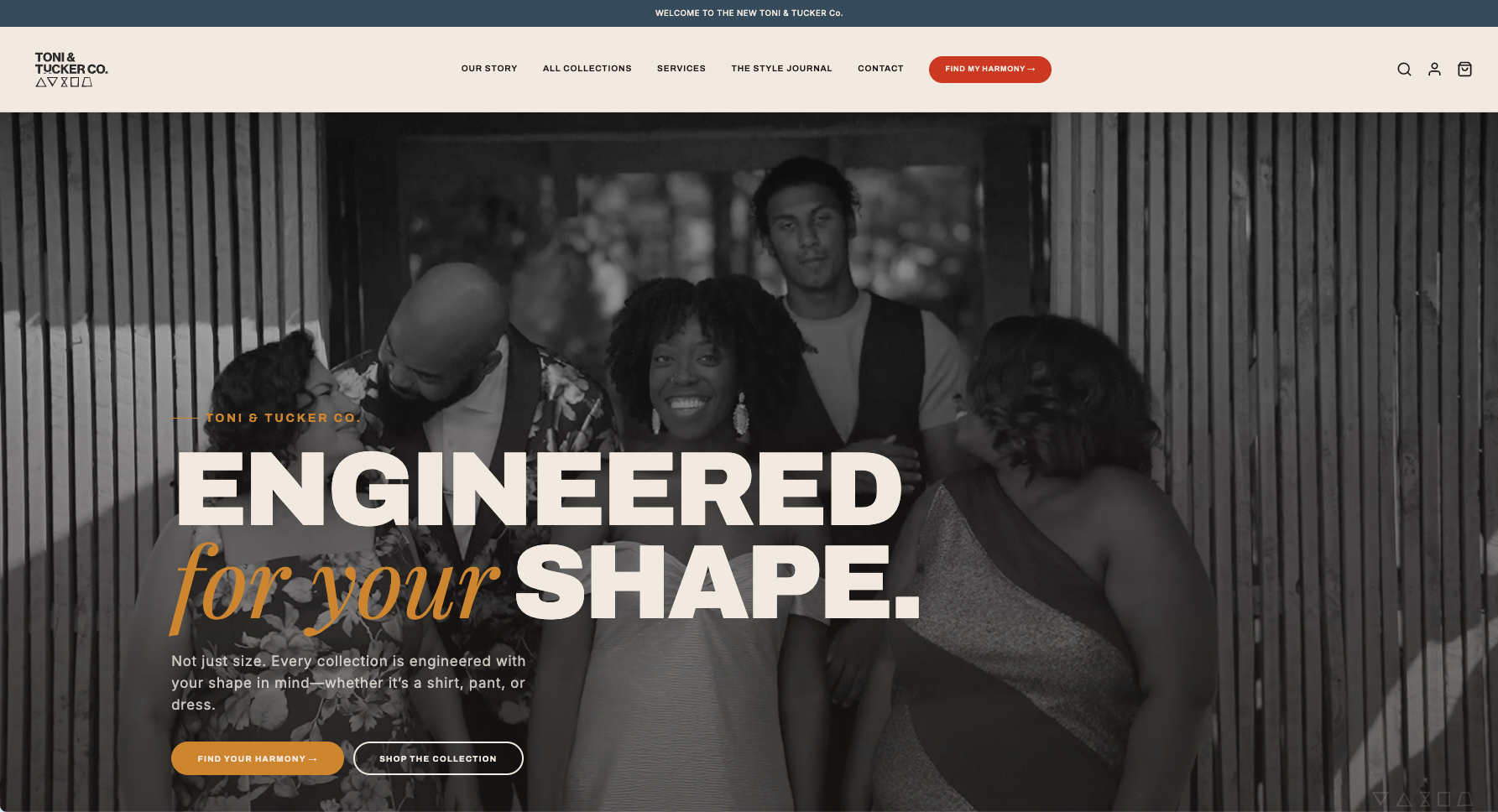
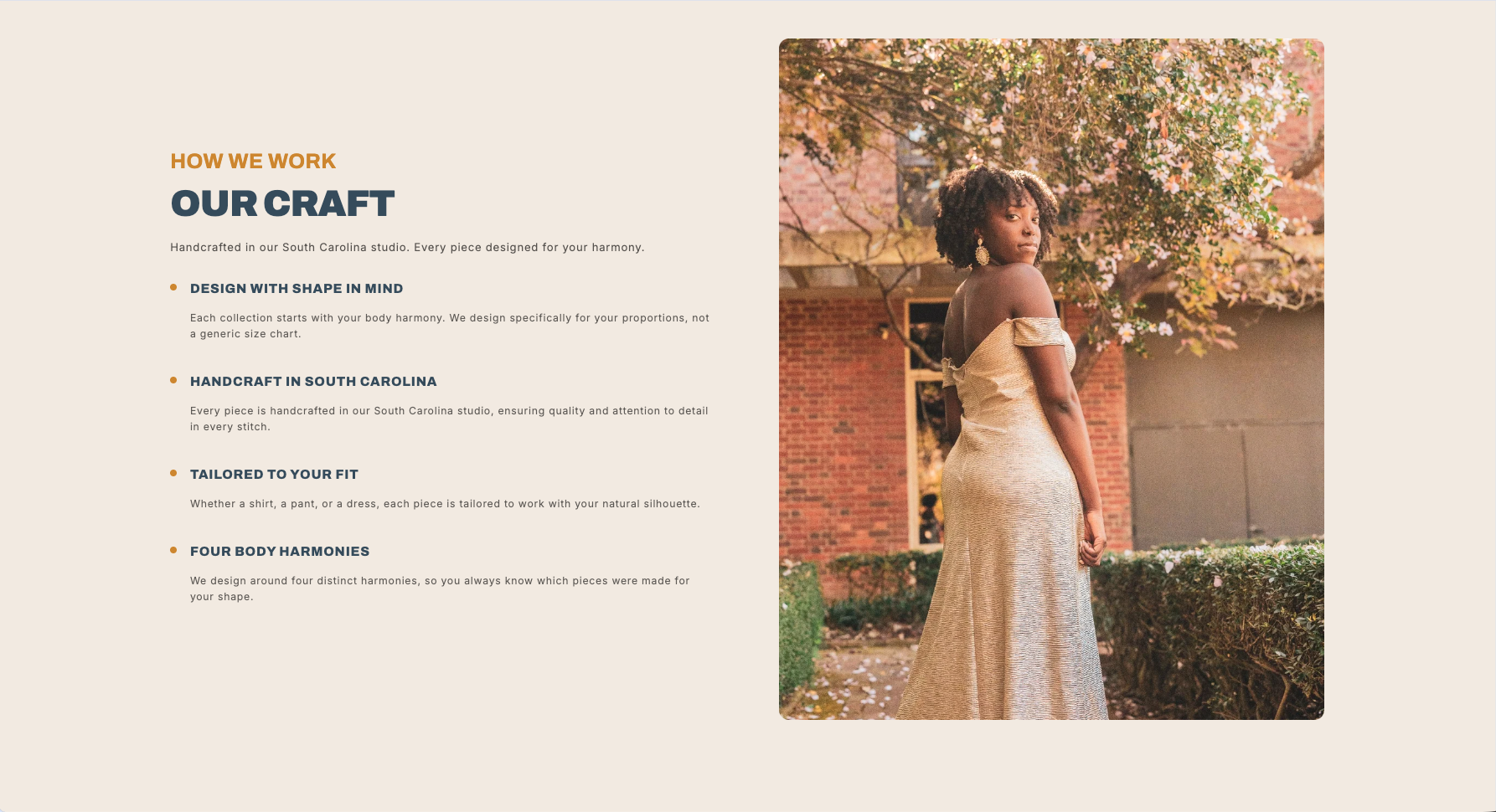
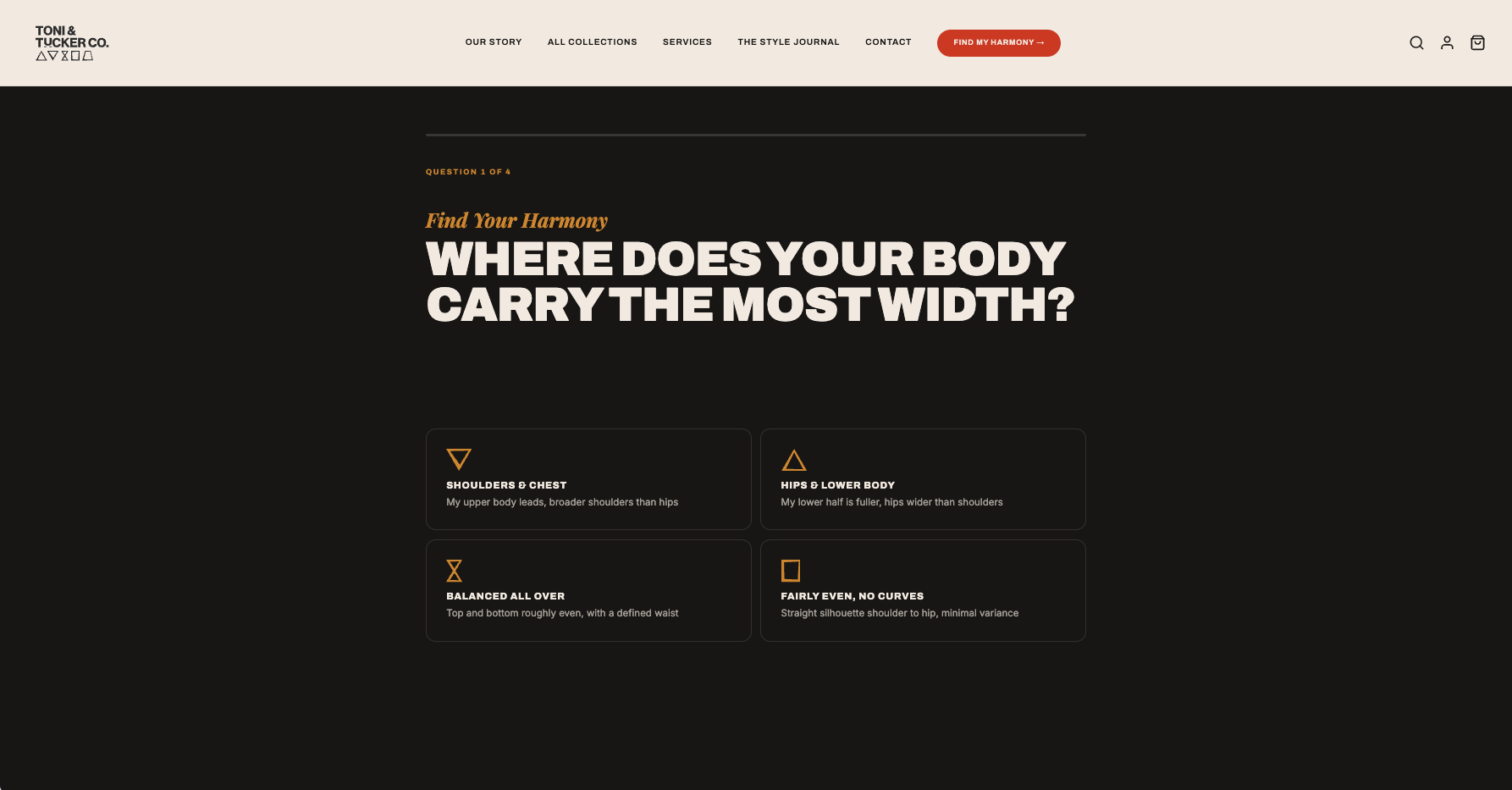
So the site got a fit quiz. Four harmonies, an interactive path to finding yours, and a direct route from your result to the products that actually apply. The question blocking the sale now gets answered before the sale.
The brand video did something we didn’t predict. In the survey, nearly everyone said it made them understand the brand better, and several said it made them more likely to buy. The best feedback came from someone in her community who said it was the first time it was clear to them exactly who Toni was. Hearing a brand explained back to you correctly by a stranger is the outcome.
Promoting a product used to mean building a page. Now it happens at the product level: add it, mark it featured, decide where it appears, write the extended content. No layouts, no apps, no calling us.
The harmony icons were built simple enough to survive anywhere. Packaging, hang tags, the site, and a repeating pattern for shipping paper. They work as identifiers so a customer can see whether a piece is for her, and as a categorization system so Toni can organize a growing catalog around them. It’s a system that scales with her instead of needing a redo the moment she grows.
She has since left her nine to five to run Toni & Tucker full time.
Scroll the page, then check it on a phone









[Client quote: one or two sentences, in their own words, about what changed.]
[Name, Title, Organization]